Sewer Line Repair for Cracks, Roots and Sags in Fort Mill, SC
Most sewer lines don't fail end to end. One joint, one crack or one low spot causes the trouble, and that's often the only part that needs fixing.
Call to check availability
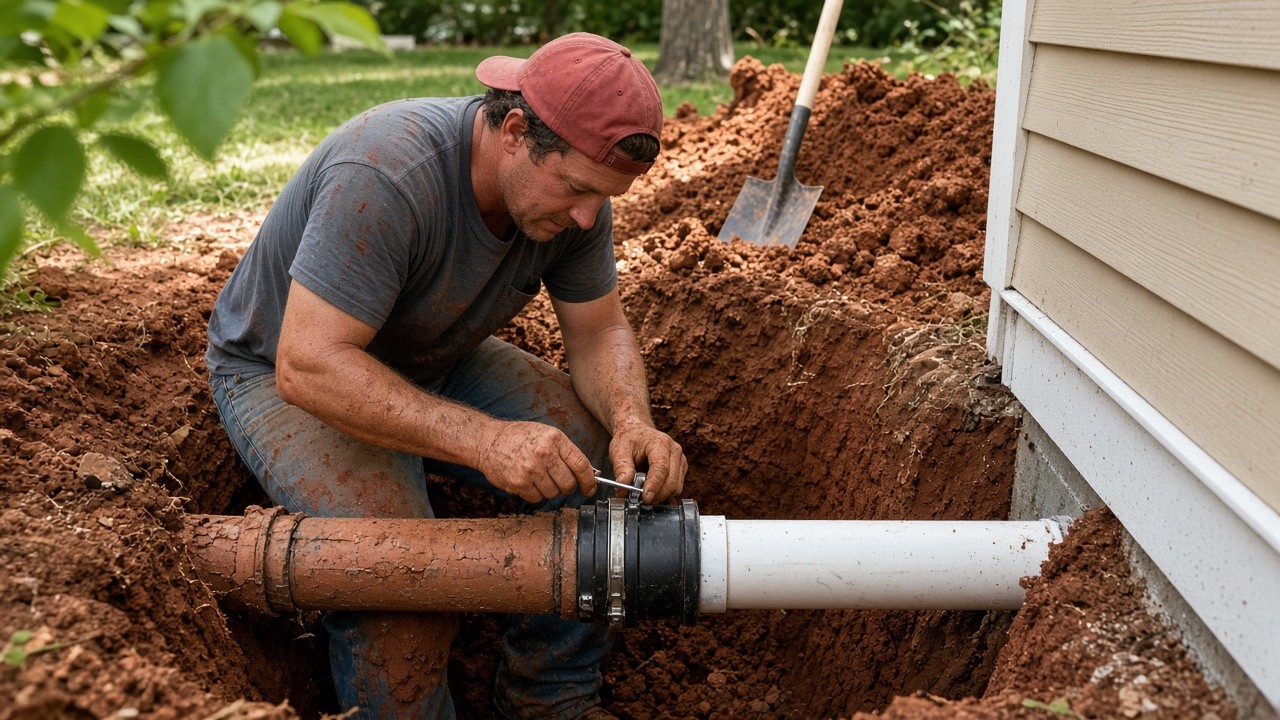
Sewer Line Repair in Fort Mill, SC usually means finding the one section of pipe that's causing the backups and fixing that section, instead of replacing the whole line. Rather than spending thousands unnecessarily destroying an entire front lawn, a targeted spot repair exposes only the damaged joint or fractured segment, replacing it with resilient modern pipe bedded correctly in Carolina clay.
What Problems Can a Spot Repair Fix?
A spot repair replaces or seals one damaged length of pipe: a cracked or broken section, a joint that has separated or shifted out of line, a root-packed joint, or a short belly where the pipe has sagged and holds water. If the camera shows damage all along the line, a full lining or replacement usually makes more sense.
Cracked or broken pipe
Heavy surface vehicle traffic, shifting soil strata, or freeze-thaw cycles can crack brittle clay or older cast iron. Replacing the single broken stick prevents mud from falling into the stream.
Root intrusion at joints
Vitrified clay pipes use joint mortar that weakens after decades. Large oak and pine roots penetrate hairline cracks. Digging out the compromised hub and clamping in smooth PVC seals roots out completely.
Offset or separated joints
When ground movement shifts adjacent pipe bells out of alignment, waste hits a solid lip and dams up. Spot excavation realigns the grade with heavy-duty banded mission couplings.
Bellies (sags) in red clay
The Piedmont's expansive red clay swells with summer rain and shrinks during dry spells. Poorly bedded backfill lets pipes sink, creating standing water pools where grease and toilet paper deposit.
How Is a Sewer Line Spot Repair Done?
The problem is located from the camera footage and marked on the surface with a locator, utilities are marked through SC811, a small excavation exposes the bad section, it is cut out and replaced with new pipe and couplings or sealed with a short internal patch liner, then the line is camera-checked and the hole backfilled and compacted.
Locate and mark
A high-resolution video camera is guided down the line; an electronic locator above ground pinpoints the exact physical depth and coordinates.
Call 811 and get marks
South Carolina 811 marks underground gas, electric, telecommunication, and water lines around the excavation perimeter to ensure job-site safety.
Expose the section
Crews carefully dig down to the marked depth using a compact mini-excavator and hand shovels, placing clay spoils on heavy protective tarps.
Replace or patch
The cracked pipe is cleanly sawed out and replaced with smooth Schedule 40 PVC secured by stainless steel banded rubber transition couplings.
Re-camera, backfill and restore
A second video camera pass verifies smooth unimpeded water flow, then the trench is mechanically backfilled, tamped in lifts, and restored.
Camera found one bad spot?
Call with what the footage showed and we'll explain the repair options in plain language.
Call (803) 887-3236How Much Does Sewer Line Repair in Fort Mill, SC Typically Cost for One Section?
A spot repair by excavation typically runs roughly $1,500–$5,000; depth, what sits on top (a driveway, patio or mature landscaping) and access are the biggest drivers; root cutting alone is roughly $150–$600. These are typical ranges, not quotes.
Digging four feet down in an open front turf area is relatively straightforward. The exact same pipe repair located eight feet deep beneath a poured concrete driveway, near retaining walls, or directly under an established root ball requires concrete saw-cutting, trench shoring boxes, and subsequent masonry restoration. That is why depth and surface access dictate where a specific project lands in the typical range.
When Is a Repair Not Enough?
When the camera shows cracks, roots or flattening in several places, especially in Orangeburg or old clay lines, fixing one spot can just move the next backup a few feet down the pipe. Then a lining or full replacement is often the better long-term value.
If multiple sections are compromised, review our options for sewer line replacement and trenchless pipe lining. Here is how deciding between a targeted repair and whole-run replacement breaks down:
Repair one section
- • Damage is confined to one isolated joint or crack.
- • Surrounding pipe run is sturdy, round, and clear.
- • First-time backup without recurring systemic failure.
Replace or line the whole run
- • Orangeburg fiber pipe has blistered or ovaled.
- • Roots penetrate multiple joints down the property line.
- • Multiple settled bellies cause chronic debris backups.
For older homes in York County or neighbors seeking sewer line repair in Rock Hill, a sewer camera inspection removes all guesswork before ground is broken. If water is currently flooding back into your fixtures, check our emergency sewer backup steps.
Frequently Asked Questions About Spot Repairs
How long does a spot repair take?
+−
Most accessible spot repairs in open lawn areas take one day or less once permits and underground utility markings through SC811 are completed. Deeper excavations, lines situated beneath concrete driveways, or areas requiring extensive landscape shoring take longer.
Will roots come back after they're cut?
+−
Mechanical root cutting clears the pipe interior temporarily, but tree roots inevitably grow back through the same fractured mortar or clay joints. Excavating to replace the compromised section with modern PVC and rubber shielded couplings creates an impenetrable physical seal that keeps roots out permanently.
Can a belly be fixed without replacing the whole line?
+−
A short, isolated belly where the trench settled can often be corrected by a localized spot repair: digging down, elevating the pipe to the proper slope, and repacking the trench with compacted stone bedding. Multiple cascading sags across the run usually call for full replacement.
Do I need to be home for the repair?
+−
You typically do not need to remain on-site once work is underway, provided external cleanout access is clear and water usage inside the house is paused during the brief pipe cut-in window.
Is a permit needed for a sewer repair?
+−
Plumbing permits and municipal inspections are commonly required by local building departments in York County and Lancaster County, especially when lines are cut or replaced. The plumbing contractor typically pulls the required permit. Exact requirements vary by town and county.
Question not covered here? Call (803) 887-3236