Sewer Camera Inspection and Hydro Jetting in Fort Mill, SC
A camera on a push cable shows exactly what's in the pipe, and a high-pressure water jet scours out what shouldn't be there.
Call to check availability
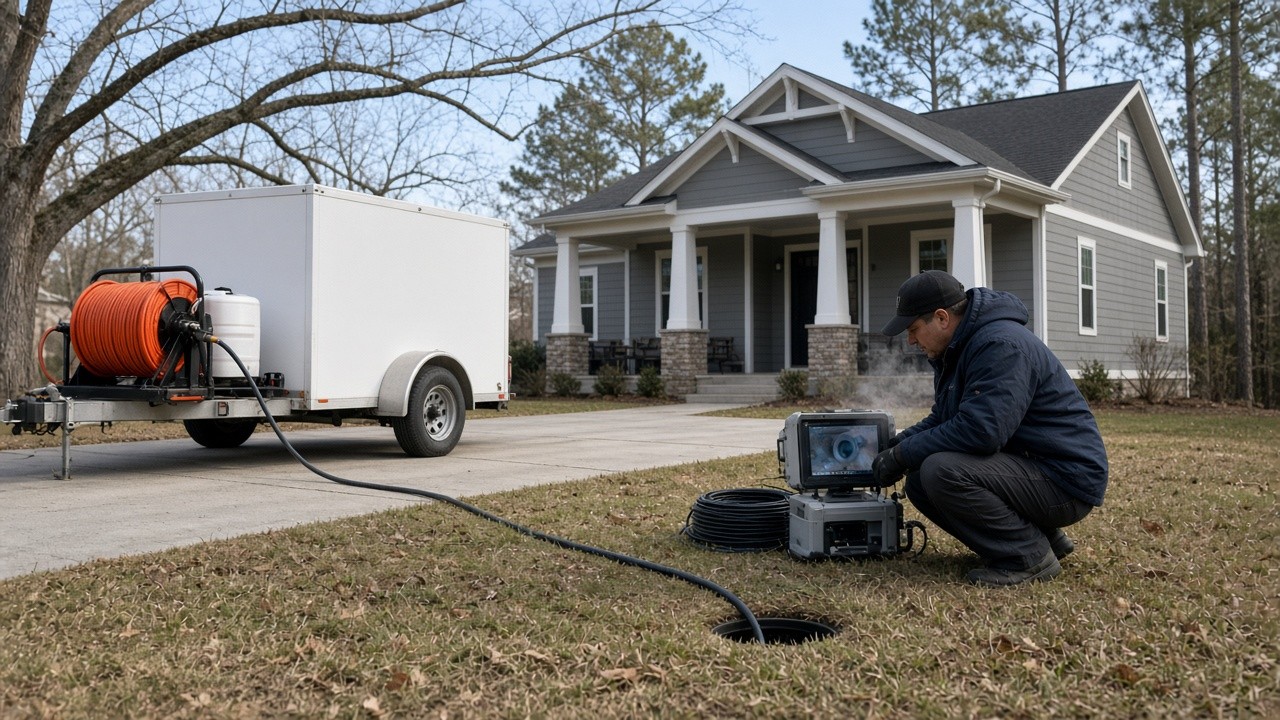
Nearly every Sewer Line Repair in Fort Mill, SC should start with a camera, because guessing at a buried pipe is how people pay for the wrong fix. Running a mechanized camera along the sewer lateral exposes hairline cracks, root masses, grease buildup, and settled low spots before anyone brings heavy equipment into your yard.
What Does a Sewer Camera Inspection Show?
A waterproof camera on a push cable travels from a cleanout, roof vent or pulled toilet toward the street and records the inside of the pipe: roots, cracks, offsets, sags holding water, grease and the pipe material itself. A locator at the camera head lets the problem spot and depth be marked on the ground.
Roots
Hairline tendrils that entered mortar joints and matured into dense line-blocking mats.
Cracks and breaks
Fractured clay barrels, crushed Orangeburg walls, or brittle cast iron fractures.
Offset joints
Misaligned connections where soil movement has created a ledge that catches debris.
Standing water
Low sag areas (bellies) where the camera submerges and paper collects.
Grease and scale
Congealed kitchen fats and calcified tuberculation narrowing the interior pipe bore.
Pipe materials
Transitions between cast iron under the slab, clay in the lawn, and PVC near the main.
What Is Hydro Jetting and When Is It Used?
Hydro jetting sends water at high pressure through a hose with a rear-facing nozzle that scours grease, scale, sludge and fine roots off the pipe walls. It cleans more thoroughly than a cable machine, which punches a hole through a clog, but it isn't for pipe that's already broken or badly deteriorated.
Cable machine (snaking)
- What it does: Spins a steel cable with blades through the line.
- Good for: Punching an initial relief hole through paper or root clogs.
- Not for: Removing sticky grease coats or mineral scaling from walls.
Hydro jetting
- What it does: High-pressure 360-degree water scour through specialized nozzles.
- Good for: Stripping grease, scale, sludge, and fine hair roots clean.
- Not for: Structurally collapsed pipes or severely cracked conduits.
A camera look first helps decide which is safe for your pipe.
Drains slow all over the house?
Call and describe which fixtures act up first; we'll explain what a camera look usually involves.
Call (803) 887-3236How Much Do Sewer Camera Inspection and Hydro Jetting Cost in Fort Mill, SC?
A camera inspection typically runs roughly $150–$500, cable clearing roughly $150–$500, hydro jetting roughly $350–$1,000 and root cutting roughly $150–$600; access, line length and whether a cleanout exists move the price. Typical ranges, not quotes.
When an exterior ground-level cleanout pipe is already available, diagnostic camera inspection is swift and clean. If our technicians must pull a heavy porcelain toilet or work from rooftop vents, labor requirements increase slightly. Knowing exact figures prevents costly surprises.
Should I Get a Sewer Scope Before Buying a Home?
It's a common step, especially for older homes or lots with big trees, because a standard home inspection usually doesn't look inside the sewer line. Ask the seller about past backups and repairs, and keep the footage.
Standard general home inspections check that sinks drain and toilets flush, but cannot see concealed root growth or broken clay joints four feet underground. Both historic homes in downtown Fort Mill and fast-growing tracts across the Lancaster County panhandle in Indian Land benefit from pre-purchase camera scopes. In newer developments, heavy construction equipment can accidentally crush lateral PVC pipes during backfilling, leaving hidden bellies.
If the camera pinpoints a compromised section, compare our targeted sewer line repair or whole-run replacement options. In sudden overflow situations, review our emergency sewer backup help and cleanout installation.
Frequently Asked Questions About Camera Scoping & Jetting
Will the camera damage my pipes?
+−
No. The inspection optical head is rounded, flexible, and guided by a non-abrasive fiberglass push rod that glides along the interior pipe wall without applying cutting friction or structural stress.
Can hydro jetting damage an old pipe?
+−
High-pressure water jets can potentially aggravate brittle pipes that are already fractured, thin-walled, or collapsing. That is why video camera inspection always precedes hydro jetting to verify that the pipe walls can safely handle water pressure.
Do I get a copy of the video?
+−
Yes. Homeowners can receive the recorded digital video file. Keeping a copy is valuable for comparing future line wear, providing documentation for insurance inquiries, or showing prospective home buyers.
What if my house has no cleanout?
+−
If no ground-level outdoor cleanout exists, the camera can access the lateral by carefully pulling a ground-floor toilet or feeding through a rooftop plumbing vent stack. Installing an outdoor cleanout makes future maintenance much easier.
How often should a line be jetted?
+−
Only as required. Lines with aggressive mature tree roots or heavy grease accumulation may benefit from periodic cleaning, whereas a permanent spot repair or trenchless lining can eliminate the root intrusion source altogether.
Question not covered here? Call (803) 887-3236